
There is no single best month for every route
Türkiye stretches across coastlines, plateaus and mountain regions. Istanbul can be cool and changeable while the Mediterranean coast is mild; Cappadocia can have cold mornings when the Aegean feels warm. Choose dates according to the route and the experience you value most rather than relying on one national weather summary.
Spring: cities, ruins and changing conditions
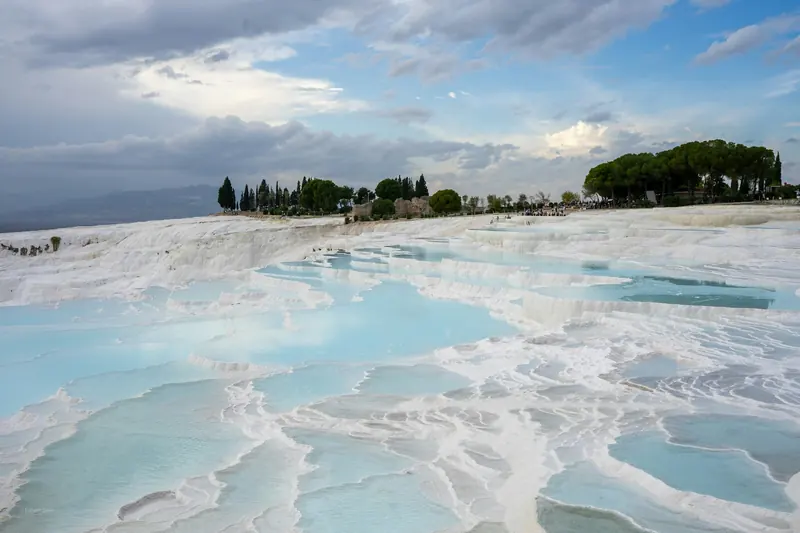
Spring often suits travellers who want long walking days in Istanbul, Ephesus or Pamukkale without planning around peak summer heat. Landscapes can be green and daylight expands, but rain and temperature swings remain possible. Pack layers and a light waterproof shell. Holiday periods can affect domestic demand, so confirm transport and accommodation rather than assuming shoulder season always means empty.
Summer: coast, early starts and heat-aware planning
Summer naturally favours the Aegean and Mediterranean coasts, swimming and evening life. Archaeological sites are exposed, however, and midday heat can make a short distance feel demanding. Start major outdoor visits early, carry water, use sun protection and avoid stacking several uncovered ruins into the same afternoon. City routes should include shade, museums and realistic breaks.
Autumn: balanced cultural routes
Early and mid-autumn can combine warm coastal conditions with more comfortable cultural touring. It is a useful period for routes linking Istanbul, Ephesus, Pamukkale and the Mediterranean, though conditions vary by year and altitude. Days shorten as the season advances, so check opening times and do not build a summer-length sightseeing schedule into late autumn.
Winter: quieter cities and genuine seasonal travel
Winter can reward travellers who enjoy museums, food, city neighbourhoods and dramatic landscapes. Cappadocia may be cold and can receive snow; central and eastern regions differ sharply from the milder southern coast. Some seasonal services may be reduced. Build flexibility into road travel and verify operating hours. A winter itinerary should be designed as winter travel, not a summer plan with a heavier coat.
Balloon flights need a separate weather expectation
Cappadocia balloon operations depend on aviation and weather decisions, not simply on whether a day looks sunny from the ground. Wind can cancel a flight in any season. If ballooning is a priority, allow more than one morning and keep a worthwhile land itinerary. Never treat a flight as guaranteed until the authorised operator confirms operation.
Choose with three questions
First, which regions are essential? Second, how much heat, cold or rain are you comfortable walking in? Third, is your priority coast, archaeology, hiking, photography or quieter city time? Once those answers are clear, dates become easier to compare. Check short-range forecasts shortly before departure and keep clothing adaptable.
GoTürkiye’s four-season overview provides official destination context; use a current meteorological forecast for the actual travel week.