
A city shaped by movement
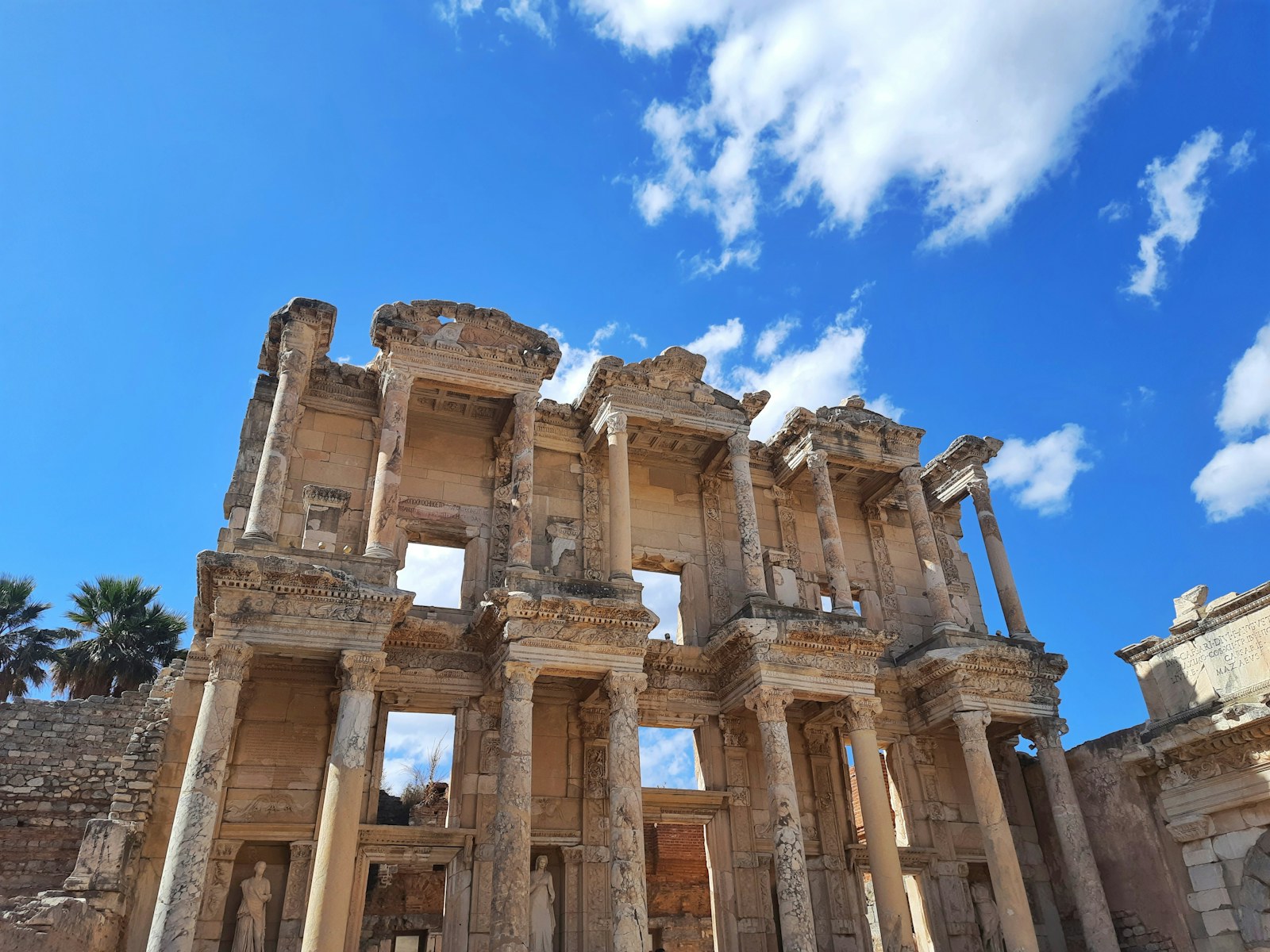
The Library of Celsus is the image many travellers carry home from Ephesus. Its columns and carved façade deserve the attention, but the ancient city makes more sense when you see it as a changing landscape rather than a single monument. Settlements, harbours and sacred places shifted as the coastline moved. Today's archaeological paths lead through one chapter of a much longer story. Plan enough time to notice how streets connect buildings, how slopes guide movement and how the surrounding plain once related to the sea. Ephesus rewards curiosity as much as a camera.
Read the landscape first
UNESCO describes Ephesus as a succession of settlements formed around the former estuary of the Kaystros River. Sediment gradually altered the coastline, and the places people occupied changed with it. The Roman city you walk today was once linked to a working harbour. Its location explains the city's commercial strength and the scale of its public buildings. Before entering the ruins, look across the plain and imagine water where fields now stretch. This simple orientation turns a collection of stones into an intelligible city. The wider World Heritage property also includes traces of earlier and later periods around Selçuk.
Follow the streets, not only the highlights
Take the archaeological route at a measured pace. The marble streets provide a sense of direction, while fountains, gateways and public spaces suggest how people moved through the city. The Library of Celsus, the Great Theatre and the Temple of Hadrian attract attention, yet the spaces between them matter just as much. Pause at a junction and ask what a resident might have encountered there: trade, ceremony, conversation or an ordinary errand. Interpretation panels and a knowledgeable guide can help distinguish surviving ancient fabric from later conservation. Surfaces can be uneven and exposed, so comfortable shoes and water are sensible essentials.
Pause at the Library of Celsus
The library façade is a powerful piece of urban theatre. It faces a public square and invites you to consider how architecture communicated learning, status and civic memory. UNESCO lists the library among Ephesus's principal Roman Imperial monuments. Look at the proportions before seeking the familiar frontal photograph; then step aside to see how the façade relates to the street and neighboring structures. Parts of the ancient city have been reassembled or stabilized over time, so the scene reflects both antiquity and modern conservation. Give the building a few quiet minutes instead of treating it as a checkpoint.
Imagine an audience at the theatre
The Great Theatre makes the city's scale easier to grasp. Set into a hillside, it opens toward the route of the ancient harbour. Stand at a permitted viewpoint and consider how a crowd would have entered, gathered and watched events there. The theatre was a civic place as well as a performance space; its changing uses reflect the city's long life. Avoid climbing on closed seating or stepping beyond barriers for a clearer photograph. Conservation is part of the visitor experience, and access to individual areas may change. The view is impressive without putting fragile stone or other visitors at risk.
Look for domestic life
Grand buildings can make an ancient city feel distant. The terrace houses offer another perspective: rooms, decoration and domestic arrangements reveal how some prosperous residents lived. UNESCO notes their mosaics, wall paintings and marble details. They represent a particular social group, not every household in Ephesus, and that distinction matters. If the houses are open during your visit, allow extra time to study the surviving patterns and protective structures. Check current access and ticket arrangements before travelling, because entry conditions can differ from the main archaeological route. The contrast between private interiors and monumental streets is especially revealing.
Continue the story in Selçuk
Ephesus does not end at the exit gate. Selçuk's museum displays objects from the ancient city and its surroundings, including notable representations of Artemis, according to Türkiye Museums. Seeing portable objects after the outdoor ruins adds detail to the story of belief, craft and daily life. Nearby Ayasuluk Hill and the Basilica of St John speak to later phases of settlement and pilgrimage. The Temple of Artemis survives only in limited remains, but its former importance reaches far beyond what is visible today. Treat these places as connected chapters rather than trying to judge each by the size of its ruins.
A thoughtful day plan
For a first visit, devote the strongest part of the day to the archaeological city. Start with an overview, walk the principal streets, then choose a few places to examine slowly. After a break, continue to the museum in Selçuk or another nearby heritage site that matches your interests. If you have a second day, use it to explore the wider landscape, the town and a less hurried museum visit. A day trip from Istanbul is possible in some itineraries, but flight times, transfers and on-site access determine how much can actually fit. Build the route around realistic travel time rather than a long checklist.
Practical choices that improve the visit
The ruins are largely outdoors, and shade can be limited. Check the forecast, carry drinking water and dress for the conditions. Uneven stone and long walking stretches call for supportive footwear. Follow signs and staff instructions, especially where excavation or conservation work changes the route. Opening hours, tickets and access to individual monuments can change, so consult official museum information shortly before departure. If religious sites are part of your day, dress and behave with respect for their current use. A guide or reliable interpretive material helps place spectacular architecture in the context of the people who built and used it.
Leave with a larger picture
What stays with many visitors is the library façade. What makes Ephesus extraordinary is the relationship among the harbour landscape, streets, homes, theatres and later places of worship. UNESCO recognizes that layered settlement history, not only one photogenic building. Slow down, retrace a short stretch of street and notice a detail you missed the first time. Then carry the story into Selçuk, where museum collections and the surrounding sites extend the timeline. An Ephesus visit feels richer when each stop answers a question raised by the previous one.