
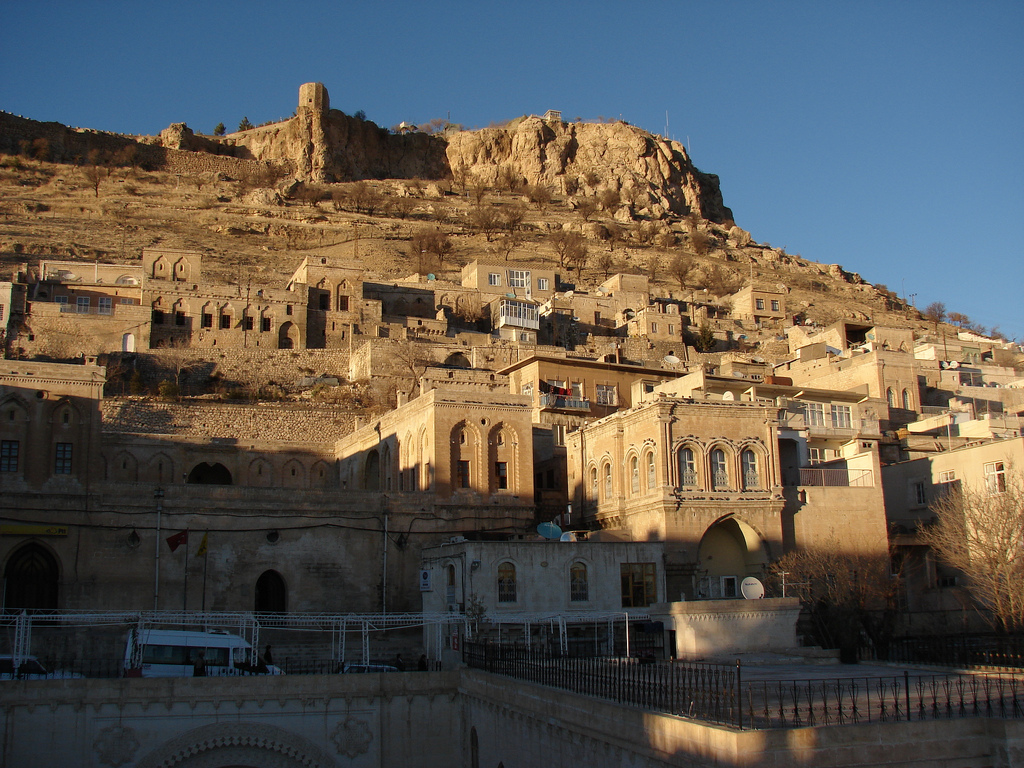
A city shaped by stone and horizon
Mardin rises in terraces above the Mesopotamian plain, its honey-coloured buildings appearing to grow from the hillside. The famous view is an excellent introduction, but the city deserves more than a sunset photograph. Its streets bring together Artuqid architecture, Syriac Christian heritage, Islamic monuments, craft traditions and daily life in a borderland shaped by many languages and communities. UNESCO’s Tentative List describes Mardin as a well-preserved cultural landscape whose traditional stone buildings and terraced urban form are central to its character. A rewarding visit therefore combines architecture, living religious sites, museums, markets and time to observe the plain below.
Begin early on the main street
Start near Cumhuriyet Square before traffic and tour groups become heavier. The main street provides orientation, while stepped lanes and covered passages lead into quieter neighbourhoods above and below it. Mardin’s limestone reflects strong midday light, so morning makes carved façades easier to study and walking more comfortable. Look for projecting stonework, shaded courtyards, narrow abbara passages and roof terraces. These are not stage sets: many buildings remain homes, workshops or places of worship. Keep voices low in residential lanes, ask before photographing people and avoid entering courtyards unless invited.
Use the museum as a historical anchor
Mardin Museum is a useful first stop because its archaeological and ethnographic collections connect the old city with the wider region. Official museum information describes material from the Bronze Age through Assyrian, Urartian, Persian, Hellenistic, Roman, Byzantine, Seljuk, Artuqid and Ottoman periods, as well as silverwork, clothing, coffee sets and copper objects. Exhibitions and access arrangements can change, so check current official details rather than relying on an old timetable. The museum helps explain why Mardin cannot be reduced to one dynasty or faith. After visiting, architectural details and market crafts become easier to place within a longer timeline.
Follow Artuqid Mardin on foot
The Grand Mosque, Zinciriye Madrasa and Kasımiye Madrasa form an instructive sequence for understanding Artuqid and later architecture. Approach each as a functioning cultural place, not simply a backdrop. Dress respectfully, avoid interrupting prayer or study, and follow posted access rules. Zinciriye’s elevated position offers a broad view over roofs and the plain; Kasımiye’s courtyard and water symbolism encourage a slower visit. The streets between the monuments are part of the experience, revealing how buildings respond to slope, heat and limited space. If mobility is a concern, arrange transport between levels and select fewer sites rather than forcing every climb.
Recognise Mardin’s living religious heritage
Mor Behnam, often known as the Church of the Forty Martyrs, and Deyrulzafaran Monastery represent living Syriac Orthodox heritage rather than abandoned monuments. Services, community activities and visitor access must be respected. Deyrulzafaran lies outside the centre and should be visited with enough time for the journey and guided access available on the day. Learn a little about the Syriac community before arriving, but avoid turning religious diversity into a simplified slogan. Mardin’s significance lies in communities, practices and institutions that have changed across centuries while continuing to shape the region. Quiet attention is more appropriate than intrusive photography.
Let markets explain craft and exchange
The bazaars around the old city connect architecture with working culture. Coppersmiths, jewellery sellers, soap shops and food merchants use spaces that remain part of everyday commerce. Telkari silver filigree is especially associated with Mardin and Midyat, but quality and production methods vary. Ask where a piece was made, what metal it contains and how it should be cared for. Do not assume every object labelled traditional was produced locally. Small purchases from transparent workshops can support skills more meaningfully than bargaining aggressively for souvenirs. Leave passages clear, request permission for close-up photographs and treat artisans as professionals rather than exhibits.
Plan one excursion beyond the old city
Deyrulzafaran is the easiest extension, while Dara and Midyat require more travel and deserve separate time. Dara’s remains combine with a living village, so visitors should respect homes and agricultural activity around the archaeological features. Midyat offers another stone-built urban landscape, Syriac heritage and silverwork traditions. Trying to place the old city, monastery, Dara and Midyat into a single day creates more driving than understanding. With two days, keep the first for central Mardin and Deyrulzafaran; use the second for either Dara or Midyat. Confirm current access and road conditions locally before departure.
Eat with curiosity, not a mandatory list
Mardin’s food reflects regional grains, spices, meat, fruit, nuts and the traditions of different communities. Dishes such as sembusek, içli köfte, kaburga dolması or harire may appear, but recipes and availability vary by kitchen and season. Ask what is prepared that day, order modestly and share dishes when appropriate. Mırra coffee is intense and linked to specific serving customs; follow the host or server rather than treating it as a novelty challenge. Travellers with allergies should discuss ingredients clearly because nuts, dairy, wheat and shared preparation areas can be common. A calm meal is also a welcome pause from Mardin’s steep streets.
Choose light, season and pace carefully
Summer heat and strong reflected light can make exposed walking tiring, while winter may bring cold, wind or occasional difficult road conditions. Spring and autumn often suit long walks, but no season guarantees ideal weather. Carry water, sun protection and shoes with good grip for polished or uneven stone. Plan interior visits around the brightest hours and save viewpoints for softer light. Rooftops and terraces may have low edges; stay within designated areas and supervise children closely. The old city’s elevation changes matter more than distances on a map suggest, so build in pauses and avoid scheduling a tight onward transfer.
Remember Mardin as a living landscape
The best Mardin itinerary links stone, faith, craft and the Mesopotamian horizon without reducing the city to any single identity. Begin with the museum, walk the historic core, enter religious sites respectfully, speak with artisans and select one meaningful excursion. Leave room for tea on a terrace and for streets that do not appear on a highlights list. If you are planning a longer southeastern route, the Gaziantep food culture guide adds another perspective on living heritage. You can also compare Türkiye journeys before deciding how Mardin fits into your wider travel plan.