
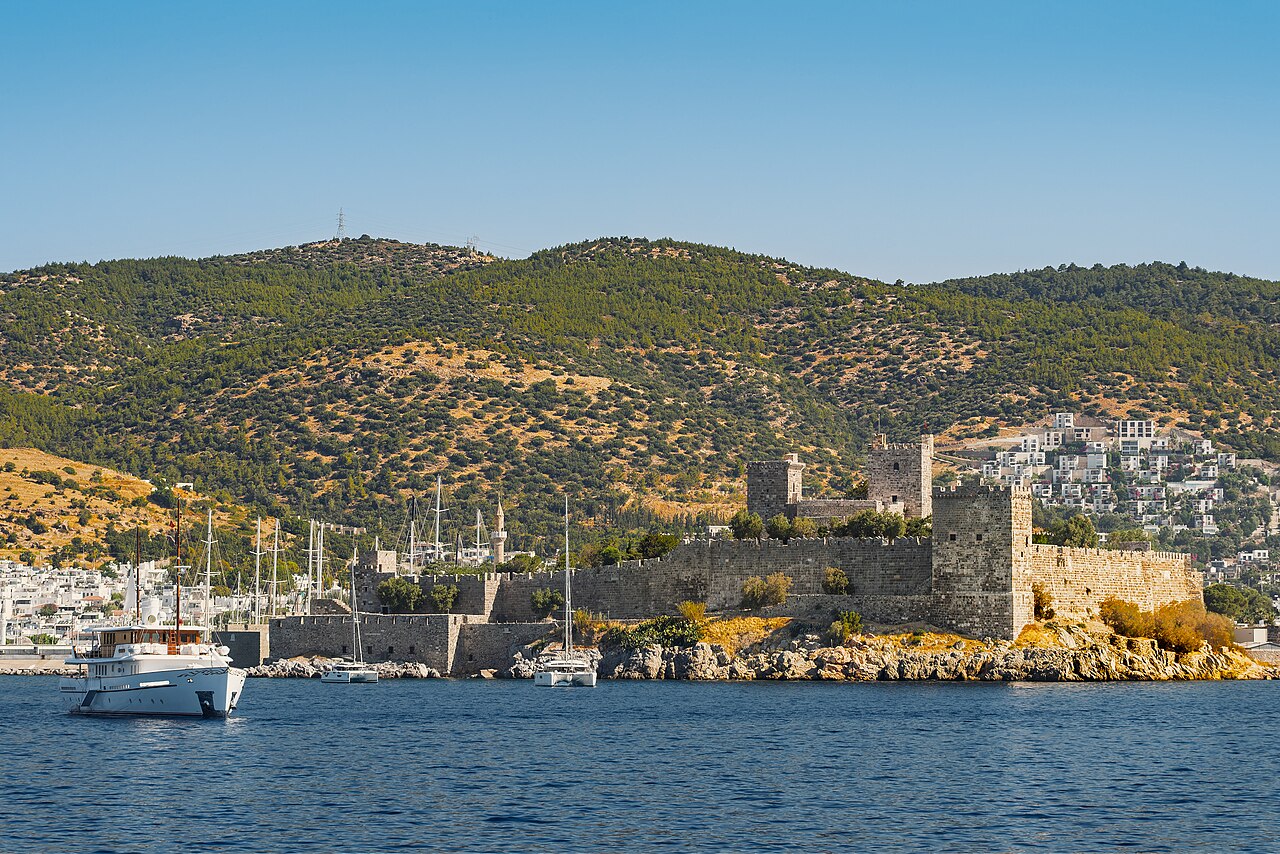
See Bodrum as both Halicarnassus and a coastal town
Bodrum is frequently introduced through beaches and nightlife, but its strongest short itinerary connects the ancient city of Halicarnassus, the medieval castle, underwater archaeology and the working geography of the peninsula. Two days are enough for a meaningful introduction if the first stays focused on the centre and the second explores the coast without trying to visit every bay. Seasonal traffic, heat and boat schedules change the practical rhythm, so build the route around distance and conditions rather than a fixed collection of social-media stops.
Begin at Bodrum Castle
Start early at the castle while the waterfront is cooler and the courtyards are less crowded. The fortress dominates the harbour and now houses the Museum of Underwater Archaeology. Stone passages, towers and stairs require supportive footwear. Accessibility varies across the complex, so travellers with mobility needs should check current information before arrival. Give the architecture time before entering every display: views toward the harbour help explain why this position mattered for navigation, defence and the later development of the town.
Use underwater archaeology to read the Aegean
The museum’s shipwreck collections turn the sea from scenery into a historical route. Cargoes, anchors, glass and ship construction reveal exchange across different periods. The Serçe Limanı glass wreck is especially useful for understanding how one excavation can illuminate trade, technology and life aboard a vessel. Galleries may close or change during conservation, so consult Türkiye Museums rather than assuming every room is accessible. Avoid rushing through labels simply to return to the beach; the collections provide the intellectual centre of a Bodrum visit.
Walk the harbour without losing the old town
After the castle, follow the waterfront and then turn into the lanes behind it. Whitewashed houses, bougainvillea, shops and cafés create the familiar Bodrum image, but many streets remain residential or commercial rather than staged attractions. Keep doorways clear and ask before photographing people. Lunch near the centre can be simple: seasonal vegetables, seafood or local mezze according to preference and budget. Confirm market prices and preparation before ordering fish, as display weight and service can affect the final cost.
Add the Mausoleum and ancient theatre
The Mausoleum at Halicarnassus was celebrated in antiquity as one of the Seven Wonders, although only parts survive at the site today. Visit with realistic expectations and use interpretation to reconstruct its scale. The ancient theatre offers another view of the city’s relationship with the slope and sea. Do not measure these places only by how much stone remains. Together they show the monumental ambitions of Carian Halicarnassus. Check current access and avoid scheduling both at the hottest point of a summer afternoon.
End the first day at a measured pace
Sunset is attractive around the harbour, windmills and western viewpoints, but traffic and parking can be difficult in high season. Choose one location and arrive without blocking narrow roads or private access. Dinner should fit the day rather than becoming another checklist. Ask what is seasonal, clarify prices and leave room to walk back through the centre. Nightlife is available, but travellers planning an early boat departure should keep the following morning in mind.
Choose the right second-day coast experience
A boat trip can connect coves that are awkward to reach by road, while a land route gives more control over walking, village stops and return time. Neither is automatically better. Before booking a boat, ask about passenger capacity, shade, swim stops, meal details, safety equipment and the exact return point. Weather can alter or cancel routes. For a land day, choose one part of the peninsula rather than crossing repeatedly between distant bays. Public transport frequency and road congestion vary by season.
Treat bays as environments, not backdrops
Clear water and sheltered coves are central to Bodrum’s appeal, but they are also sensitive environments. Use reef-safe habits where appropriate, carry reusable water bottles, avoid leaving cigarette ends or plastic and never collect marine life or archaeological fragments. Mooring practices matter; choose operators that demonstrate care for the coast. Some beaches are public, while facilities such as loungers or parking may be commercial. Ask what is included before settling in and keep access routes open.
Build a practical two-day route
On day one, combine the castle and underwater archaeology museum with the harbour, Mausoleum and ancient theatre, reducing the list if heat or access slows you down. On day two, select either a well-explained boat route or a focused peninsula journey with no more than two main stops. Check official museum details and current weather close to travel. Continue planning with our Izmir food culture guide, Ephesus guide and Türkiye tours. Bodrum becomes more rewarding when its bays, archaeology and living town are treated as one connected landscape.
Plan transport before the busiest hours
The peninsula’s road network can become congested during summer evenings and changeover days. Choose accommodation with the next morning’s route in mind, confirm the final public-transport departure and avoid building a tight airport transfer after a boat trip. Walking works well in the centre, but shade is limited. A little transport planning protects the time reserved for archaeology, swimming and an unhurried meal.