
Walk Ephesus as a city
Ephesus is often introduced by a single image of the Library of Celsus, but its streets are the real reason to go. UNESCO describes a succession of settlements and monuments that connect the ancient city with later religious and urban history. A walking route helps make those layers legible. Begin by deciding how much time and energy you can give the site, then choose an entrance and direction that suit your transport. The suggested sequence below moves broadly downhill from the upper gate toward the theatre and lower area. Access arrangements can change, so confirm the current route and entry points with the official site before travel.
Start with the upper civic quarter
From the upper entrance, slow down before you reach the most photographed stretch. The remains around the state agora and civic buildings introduce Ephesus as a place of administration and public life. A guide can explain what survives, what has been reconstructed and what historians infer from inscriptions or excavation. Without that distinction, a field of columns can be mistaken for a complete cityscape. Look for changes in ground level and street alignment as you move onward. They reveal that ancient urban planning responded to terrain and changed over time. Keep your map handy, but do not turn the walk into a race between numbered points.
Follow Curetes Street with attention
Curetes Street brings the city into a more intimate scale. Facades, paving, steps and side passages suggest movement between public and private spaces. The temptation is to hurry toward the library visible ahead; resist it. Look back uphill and ask how the street frames the approach. Read the interpretation panels where available, and be careful not to lean on fragile stonework for photographs. The route has exposed sections, so sun protection, water and suitable shoes matter. Smooth ancient paving can also be slippery after rain. A comfortable pace makes room to notice architectural details that vanish when a group is trying to keep to a strict minute-by-minute schedule.
Decide whether to visit the Terrace Houses
The Terrace Houses add an important domestic dimension to a visit dominated by monuments. Their mosaics and decorated rooms make it easier to imagine how some residents lived, while also showing that surviving homes represent particular social circumstances rather than every household in Ephesus. The area generally requires a separate admission arrangement, so check the official ticket information before deciding. Allow enough time to examine the displays rather than treating the stop as a short detour. If mobility or heat makes the additional visit difficult, it is reasonable to focus on the main route instead. A well-understood shorter walk is better than an exhausting list.
Give the library a longer look
The Library of Celsus deserves its fame, but a photograph alone does not explain its setting. Pause to see how the facade relates to the adjacent streets and open spaces. Ask what belonged to the original building, what was restored and how the ancient city changed around it. The light may be dramatic in a particular hour, yet visiting conditions and crowds are variable; do not build an entire itinerary around a guaranteed empty view. Step aside so other visitors can pass, then look at the structure from more than one angle. The aim is to understand why it stands here, not merely to prove you reached it.
Continue toward the Great Theatre
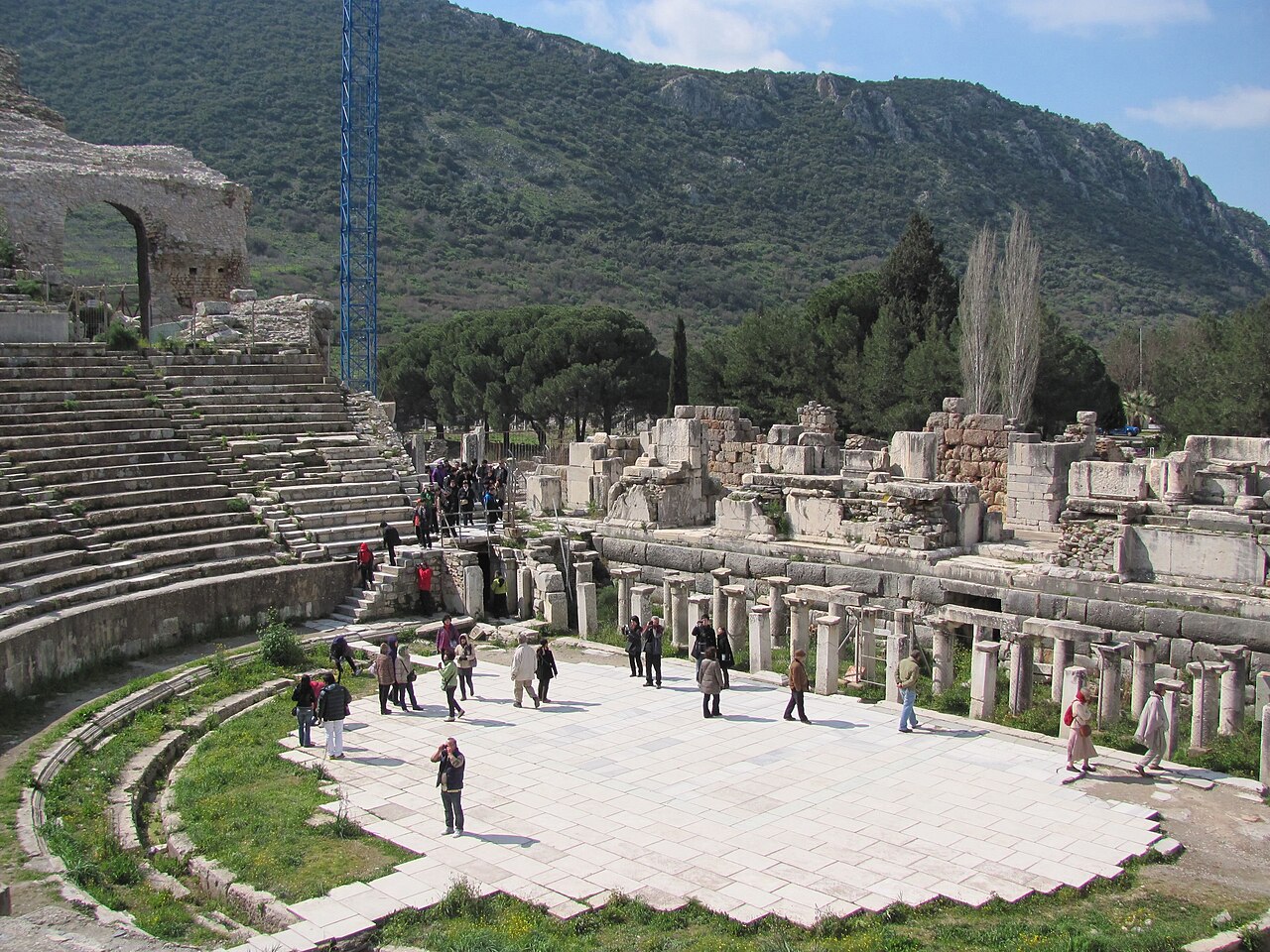
The approach to the Great Theatre changes the scale again. Its seating and position speak to a city capable of gathering large audiences, though what you see today is the result of long use, alteration and conservation. Take time to look from an appropriate public viewpoint rather than climbing where access is restricted. Nearby, consider the line of the old harbour route. The coastline and landscape are different from those of antiquity, so the distance between the ruins and the present shore should prompt a question about environmental change. UNESCO's account of Ephesus helps connect this walking impression with the site's wider history.
Finish without rushing the exit
The lower end of the route is a sensible place to review what you have seen. If your transport is collecting you there, confirm the precise meeting point in advance; the two entrances are not interchangeable. Travellers arriving from Kuşadası port should share their ship's all-aboard time and allow a realistic return margin. Our private Ephesus shore excursion explains how the port day is arranged. Those staying in the area can consider the museum at Selçuk on another part of the day. The collection gives objects a setting beyond the open-air ruins and can deepen questions raised during the walk.
Match the route to your group
Ephesus is an outdoor archaeological site with uneven surfaces and little reason to hurry. Families, older visitors and people with mobility needs should discuss distance, slopes, rest points and current accessibility information before booking a guide or transfer. No single route suits everyone. A knowledgeable licensed guide can adjust the pace and distinguish established evidence from an attractive story. Ask in writing what is included: private vehicle, guide language, standard admission, the Terrace Houses supplement and any additional stop. Our Ephesus destination guide provides wider historical context, while all tours show available route ideas.
Leave with a city, not a checklist
The best Ephesus visit links the civic quarter, Curetes Street, homes, library and theatre into a sequence of changing spaces. You may remember one facade most vividly, but the walk explains why it matters. Check official opening and ticket information shortly before departure, carry water and give the ruins enough time to be more than a backdrop. If an unexpected closure changes the sequence, adapt rather than forcing a promised photo stop. Ephesus remains rewarding when you look at the relationships among buildings, landscape and later history. The route is a framework for attention, not a test of how many landmarks you can name.