
Treat Çanakkale as two different historical landscapes
Gallipoli and Troy are often sold as a single rushed excursion, yet they ask visitors to read history in very different ways. On the Gallipoli Peninsula, cemeteries, memorials, ridges and beaches preserve the memory of the 1915 campaign and its human cost. South of Çanakkale, Troy presents a multi-layered archaeological settlement whose sequence reaches across thousands of years. A two-day base in Çanakkale gives each landscape room to speak. It also avoids turning commemoration and archaeology into a race between photo stops.
Use Çanakkale as the practical centre
The waterfront city is the natural base because ferries connect it with the Gallipoli side, while roads lead south toward Troy. Choose accommodation for access rather than a decorative view alone, and check current ferry and road information close to travel. Seasonal traffic, ceremonies, weather and maintenance can alter the day. The city’s museums and waterfront also provide context, so arrival evening need not be empty time. A short walk along the Dardanelles introduces the geography that shaped both ancient exchange and twentieth-century military strategy.
Begin Gallipoli with orientation, not assumptions
The Gallipoli Historical Site covers a broad peninsula with multiple routes, cemeteries, monuments, museums and natural areas. Start with an official map or visitor centre and decide whether your emphasis is the northern Anzac sector, the southern battlefields and memorials, or a broader overview. Trying to cover every named point in one day produces long vehicle transfers and very little understanding. A licensed guide can help explain terrain and chronology, but the route should still allow quiet time. Ask in advance which stops are planned and how much walking is involved.
Visit memorials as places of mourning
Turkish memorials, Commonwealth War Graves Commission cemeteries and monuments associated with different forces represent distinct traditions of remembrance. They are not interchangeable attractions. Dress with care, keep voices low and never climb on structures or graves for photographs. Names and inscriptions deserve time. At busy viewpoints, step aside for commemorative groups and relatives. Avoid nationalistic simplifications: the campaign involved soldiers and civilians from many communities, and responsible interpretation acknowledges loss without turning suffering into spectacle.
Let terrain explain the campaign
Ridges, gullies, narrow beaches and the distance between water and high ground communicate facts that maps alone cannot. Stops around Anzac Cove, Lone Pine, Chunuk Bair or the southern sector should be selected to show this relationship rather than to maximise the number of pins. Conditions can be hot, windy or exposed, and paths may be uneven. Carry water, sun protection and a layer, but keep belongings compact. Stay on marked routes because protected areas, graves and unexploded-war risks require respect for boundaries. Follow all instructions from the Historical Site Directorate.
Cross back without overloading the evening
After a Gallipoli day, return to Çanakkale and leave space to process what you have seen. A museum visit may suit the late afternoon if opening arrangements allow, but a long second lecture can be tiring. Use dinner and the waterfront for a quieter transition. Confirm the following morning’s transport to Troy and avoid relying on an old ferry or bus timetable. This pause separates a commemorative landscape from the archaeological questions of the next day.
Read Troy as a sequence of settlements
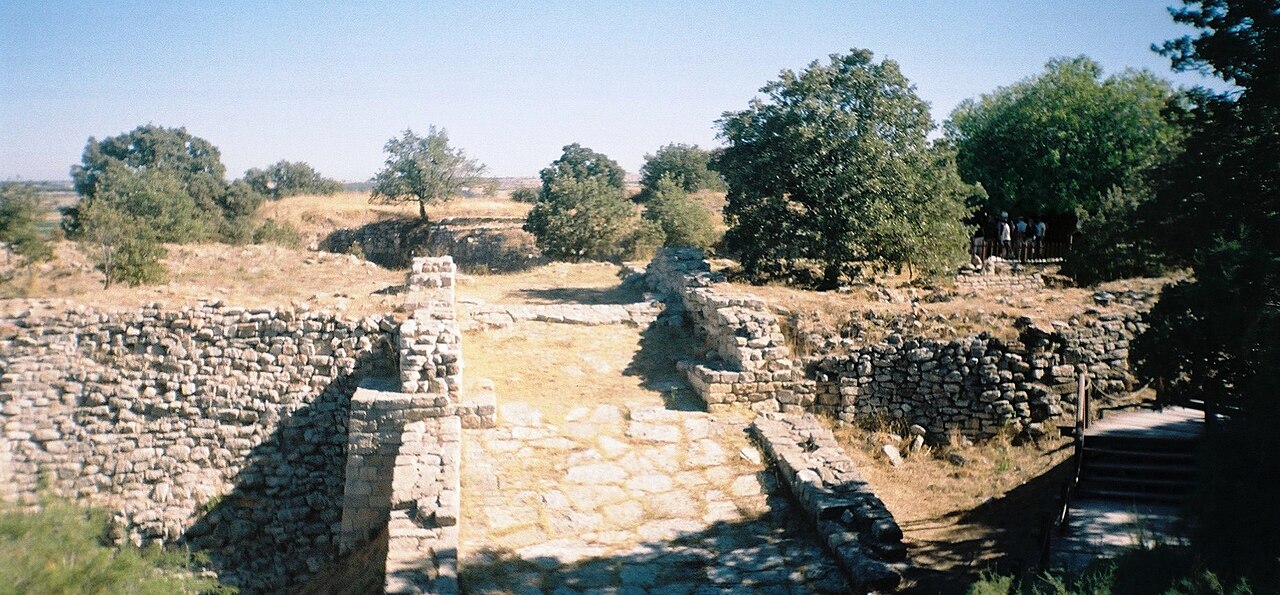
UNESCO describes Troy as a site with roughly four thousand years of history and exceptional evidence for contact between Anatolia and the Mediterranean world. The numbered layers do not represent a single city rebuilt once; they record repeated settlement, destruction, adaptation and expansion. At the site, follow the marked route and use diagrams to distinguish walls, gates, houses and later Greek or Roman structures. The famous literary story is one part of Troy’s significance, not a substitute for its archaeology. A guide or audio interpretation can help prevent every stone wall from becoming an imagined scene from the Iliad.
Pair the site with the Troy Museum
The museum gives objects, excavation history and regional context that the exposed mound cannot provide on its own. Visit before the archaeological site if you want a chronological framework, or afterwards if you prefer to recognise materials from places already seen. Either order can work; the mistake is allowing too little time for both. Check official access information because hours, ticketing and gallery arrangements can change. Do not present disputed identifications or legends as settled fact. Troy’s importance is strong enough without exaggeration.
Build a realistic second-day route
Leave Çanakkale with enough margin for the museum, the archaeological site and the return journey. Add a village or coastal stop only if transport is secure and daylight allows. Archaeological ground is exposed, so bring water, a hat and shoes suitable for uneven surfaces. Do not touch fragile masonry or leave marked paths. If your itinerary continues toward İzmir, Ephesus or the Aegean coast, avoid scheduling a late arrival followed by an early tour; road distances are longer than they look on a national map.
Choose depth over a one-day combination
A single long day can technically connect parts of Gallipoli and Troy, but it usually sacrifices the silence required at memorials and the concentration required at an archaeological site. Two days are a better minimum, with a third night useful for travellers who want museums or a slower peninsula route. Compare our Ephesus guide, Türkiye tours and destination collection before linking Çanakkale with the rest of the country. The most valuable outcome is not claiming to have “done” two famous names; it is understanding how landscape carries memory across radically different periods.