
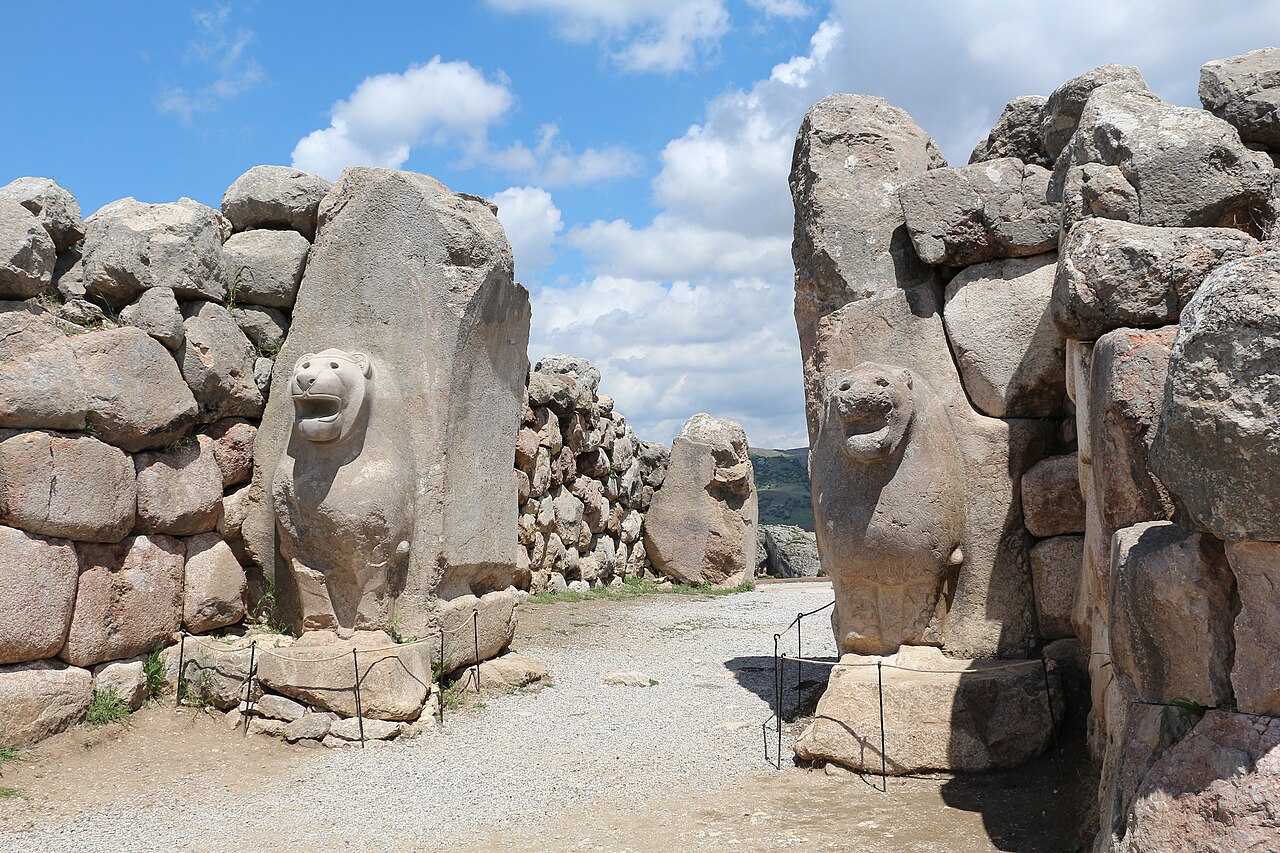
A capital that still occupies its landscape
Hattuşa asks for more time than a photograph at the Lion Gate. The UNESCO-listed former Hittite capital spreads across a slope near Boğazkale in Çorum province. Its walls, temples and rocky heights formed a political centre with influence across Anatolia and northern Syria during the second millennium BCE. What survives is fragmentary, yet the terrain explains the city: a lower area near the plain, an upper city climbing towards fortified gates, and a sanctuary beyond the urban circuit. Connect these places rather than hunt for one complete building. The reward is a sense of how a Bronze Age capital worked within a demanding landscape.
Start in Boğazkale with a realistic plan
Use Boğazkale as a base or deliberate stop on a Central Anatolian route. The archaeological area is extensive, and distances between its features can be deceptive on a map. Check current official visitor information, transport and access conditions. Decide whether you will explore with a guide, vehicle and selected walks, or a longer route appropriate to your fitness and the weather. Give yourself flexibility: exposed ground, uneven surfaces and pauses can lengthen a visit. Treating the gates as roadside photo stops misses the city's structure. Water, sun protection, sturdy shoes and an extra layer are more useful than a rigid schedule.
Read the lower city first
The lower city introduces Hattuşa as a place of work, administration and worship, not merely a ring of walls. UNESCO identifies the Great Temple remains here as among the best preserved traces of a Hittite temple from the thirteenth century BCE. Approach the foundations as evidence of a complex rather than a building to mentally reconstruct in exact detail. Notice how open spaces and surviving stone outlines suggest circulation, storage and communal activity. A guide or official plan can help distinguish documented functions from plausible interpretations. If you have visited Ankara's Museum of Anatolian Civilizations, the material culture there can provide a useful counterpoint to the broad architectural traces on the ground.
Climb towards the upper city
The upper city changes the scale of the visit. UNESCO describes its double fortification wall, towers and major gateways, while the topography makes their defensive logic tangible. Look across the slopes before concentrating on individual carvings. The Lion Gate and Royal Gate are memorable, but they are parts of an urban system, not isolated sculptures. The Sphinx Gate occupies a raised bastion with steps and a stone tunnel below; access to particular areas may vary with conservation work. Keep to marked visitor routes and avoid climbing fragile remains for a better camera angle. From suitable viewpoints, compare the lower city's broad setting with the upper city's more dramatic terrain. That change in perspective is one of Hattuşa's strongest experiences.
Keep uncertainty visible
Ancient capitals invite confident stories about kings, ceremonies and everyday life. Some details are supported by inscriptions and excavation, while others remain open to interpretation. Ask what is original, what has been restored and which conclusions depend on comparison with other Hittite sites. UNESCO notes that long-term research has revealed temples, residences, buried granaries and water installations. These are clues to the organisation of a city, yet they do not reproduce a single ordinary day. Treating the stones as evidence rather than as a film set makes the place more compelling. Pause where you can see a wall line meet the natural rock and consider the choices builders made about labour, protection and movement.
Give Yazılıkaya a separate moment
Yazılıkaya is not simply an optional last-minute extension. The rock sanctuary forms part of the UNESCO property and is known for sculpted reliefs in its natural chambers. Visit it with enough attention to observe how the carved figures interact with the rock surfaces and enclosed space. Avoid assigning your own certain meaning to every scene without context; interpretation benefits from official material and a knowledgeable guide. The shift from broad city slopes to a more intimate sanctuary changes the rhythm of the day. If time is short, choose fewer urban stops rather than rushing through the reliefs. Check current access arrangements before travelling, and respect barriers intended to protect the carvings.
Connect the capital to Central Anatolia
Hattuşa belongs to a wider story of routes, resources and political relationships. UNESCO emphasises the city's influence across Anatolia and northern Syria, but a modern itinerary should be planned around actual travel distances. A link with Ankara can work as part of a multi-day Central Anatolian journey, especially if you want to pair the ruins with museum collections. Nearby archaeological places should be considered only when access and transport make a thoughtful visit possible. Our Ankara and Gordion guide offers another way to think about an ancient capital and its surrounding landscape. Compare the two without collapsing Hittite and Phrygian histories into one story.
Leave room for the village and the road
An archaeological visit does not end at the last gate. Boğazkale gives the day a human scale: a meal, a conversation about the route or a quiet view back towards the hills can help the site settle in your mind. Choose local services with care and confirm any guide or transfer details in writing before departure. If you are continuing towards Cappadocia or another region, do not squeeze Hattuşa between two long drives. Build a route that allows daylight for the site and a rested onward journey. Our Türkiye tours show broader travel combinations, while a tailored route request can address your actual dates and interests.
Finish with the city, not a single monument
The lasting impression of Hattuşa is its scale and relationship with the land. A carved lion may be the image you remember first, but the lower city's temple area, the ascending defences and Yazılıkaya together reveal a much richer place. Read the official UNESCO description before arriving, then let the ground complicate your expectations. Take the time to look back from more than one level and to notice where stonework yields to hillside. A careful visit will not answer every question about the Hittites. It will leave you with a clearer sense of why this landscape could support a capital, and why its surviving traces still deserve patient attention.