
Why Nemrut Dağ deserves more than a sunrise photograph
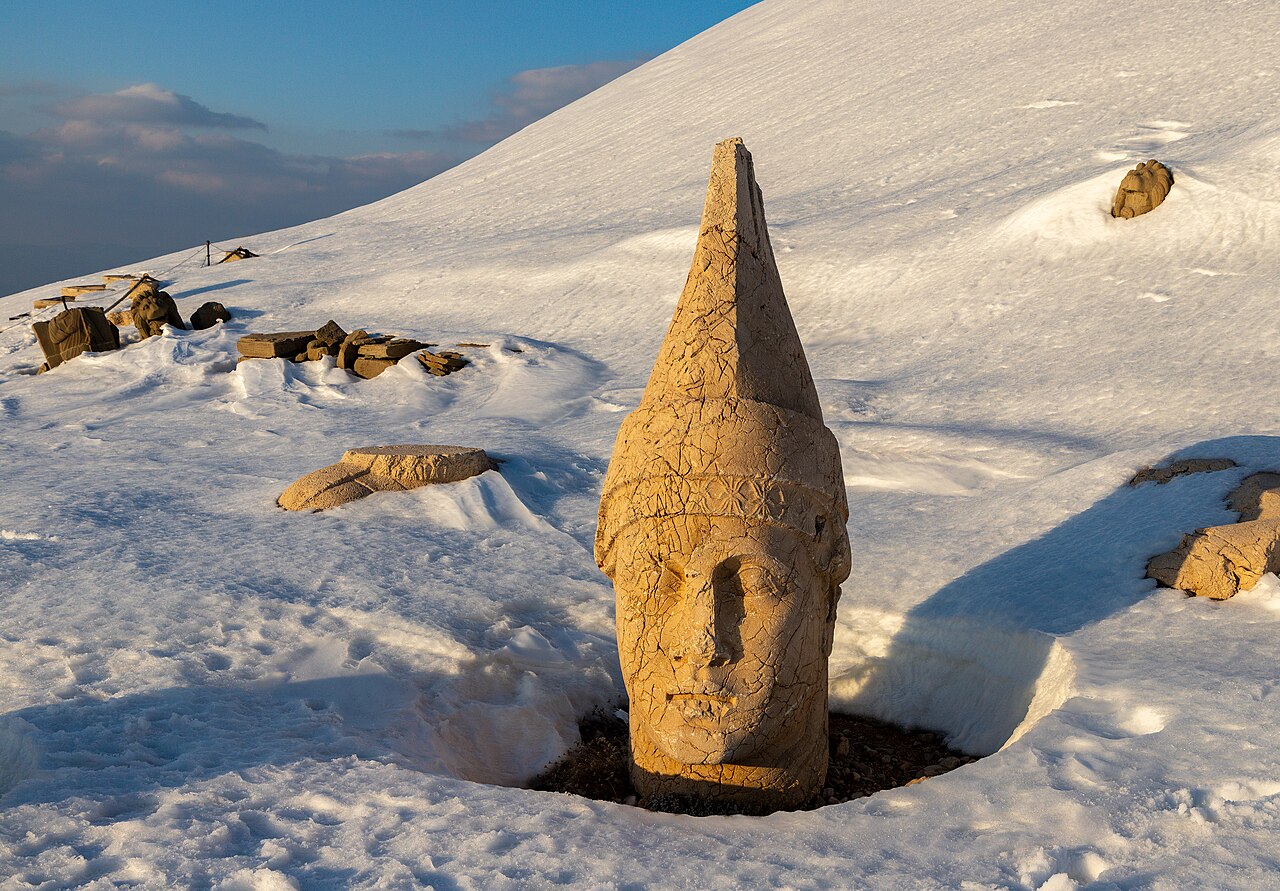
Nemrut Dağ is one of Türkiye’s most dramatic archaeological landscapes, yet its meaning is easily reduced to a row of colossal stone heads at sunrise. The summit sanctuary was created by Antiochos I of Commagene in the first century BC as a temple-tomb and dynastic monument. UNESCO describes an ambitious Hellenistic complex where Greek and Persian traditions meet. Understanding that political and cultural vision changes the visit. The mountain is not simply a viewpoint with ruins. It is a carefully designed sacred landscape of terraces, statues, reliefs and processional approaches, positioned high in the Eastern Taurus to communicate power across a vast horizon.
Read the mountain before the monuments
Approach is part of the experience. Roads climb from the Adıyaman region through a dry, open landscape where villages, valleys and the Euphrates basin establish a sense of distance. Weather can change quickly at elevation, even when the plains are warm. Carry a windproof layer, water and footwear suitable for uneven stone paths. Seasonal access, road conditions and transport services vary, so confirm them through official local sources before departure. Do not assume that a private car can reach every final point or that sunrise transport operates daily. A good plan should preserve enough time to observe the landscape rather than racing the clock.
The eastern terrace introduces the royal programme
The eastern terrace presents the sanctuary at its most ceremonial. Colossal seated figures once formed an imposing line beside the funerary mound, accompanied by guardian animals and ancestral reliefs. Fallen heads now stand at a lower level, making the scale immediately visible. Look for differences in headdress, facial style and symbolic companions instead of viewing the sculptures as identical. Inscriptions and reliefs express Antiochos’s claim to both Persian and Macedonian ancestry. This combination was not accidental decoration; it was a political language for a kingdom positioned between larger powers. Keep to marked routes because loose stone and fragile remains require careful movement.
The western terrace changes the story
The western terrace often attracts attention for evening light, but its archaeological details matter just as much. Reliefs known as dexiosis scenes show the king greeting deities, visually placing royal authority within a sacred order. The famous lion horoscope relief has been connected with interpretations of the monument’s date, although scholarly discussions are complex. Rather than searching only for one celebrated object, compare the arrangement of the terraces and how each addresses the horizon. Light can make carvings easier or harder to see. Never climb on blocks or move stones for a photograph; environmental exposure already creates serious conservation challenges.
Sunrise or sunset?
Both can be beautiful, and neither is guaranteed. Sunrise creates a gradual reveal across the eastern landscape, while sunset can bring warmer light to the western terrace. Cloud, wind and seasonal haze may transform the experience. Choose according to your route, comfort and safe transport rather than assuming one moment is compulsory. Sunrise means an early departure and colder conditions; sunset requires a careful descent and return after fading light. Carry a torch but avoid shining strong lights across other visitors or the monuments. If possible, arrive before the light change so your eyes and attention can adjust.
Add the Commagene landscape
Nemrut Dağ becomes clearer when combined with other Commagene sites. The Karakuş Tumulus, Cendere Bridge and the area around ancient Arsameia reveal roads, burial traditions and royal geography beyond the summit. Access and conservation conditions differ, and not every stop will be practical in one day. A guide with strong historical knowledge can explain connections that are easy to miss, but check credentials and the planned route. Do not turn the day into a vehicle-based collection of landmarks. Choose two or three complementary places, allow walking time and keep the mountain as the central chapter rather than one rushed item.
A realistic one-day sequence
For sunrise, leave from an appropriate local base in time for the controlled approach, explore both main terraces after first light, then descend for breakfast and rest. Continue later to one or two lower Commagene monuments before returning in the afternoon. For sunset, reverse the rhythm: visit lower sites in the cooler part of the morning, pause during the hottest hours, and climb toward Nemrut with a safe margin before evening. Transport time can be significant, and mountain roads demand attention. Avoid scheduling a long onward transfer immediately after the summit, especially when fatigue or darkness could compromise safety.
Photography with respect
Wide-angle photographs can show the relationship between sculptures, tumulus and sky, while a longer lens can isolate details without crossing barriers. Tripods, drones and commercial photography may be regulated, so verify permissions rather than assuming equipment is allowed. Keep pathways open and do not hold a position through the entire light change. The site remains vulnerable to erosion, freeze-thaw cycles and physical contact. A respectful photographer records the monument without rearranging it. Spend a few minutes without a camera; scale, wind and silence cannot be captured fully in an image.
Prepare for altitude and exposure
The summit area is high and exposed. People with mobility, respiratory or cardiovascular concerns should assess the ascent carefully and seek appropriate medical advice before travel. Paths include slopes, steps and uneven surfaces, and assistance may be limited. Move at a steady pace, protect yourself from sun and cold, and tell your driver or guide if you feel unwell. Food and water services cannot be assumed at every point. Conditions may lead authorities to restrict access for safety or conservation. Flexibility is not a failure: a lower viewpoint or a return visit is better than taking unnecessary risks in difficult weather.
Remember the kingdom, not only the heads
The strongest memory of Nemrut Dağ should include Antiochos’s extraordinary attempt to unite royal ancestry, religion, architecture and landscape. The colossal heads are powerful because they belong to that larger programme. Read reliable background before arrival, move slowly between the terraces and connect the summit with the wider Commagene region. If your Türkiye itinerary also includes western ancient cities, our Ephesus guide shows another way rulers and communities used urban space to express identity. Browse all Türkiye journeys to build a route with realistic travel time and meaningful pauses.