
A city best understood from two levels
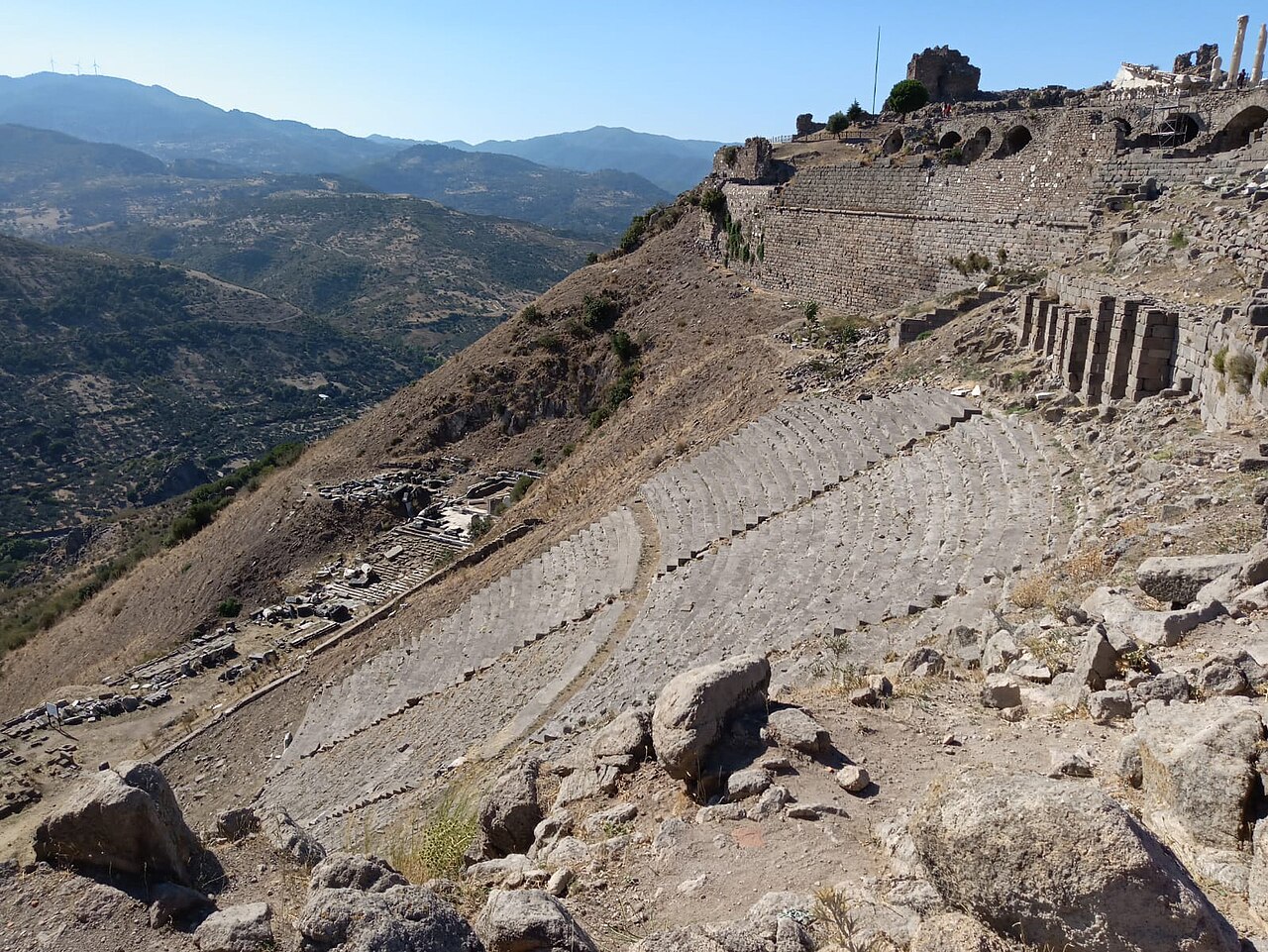
Pergamon is often introduced by a dramatic photograph of its theatre, cut into the hillside above Bergama. That view is memorable, but it tells only part of the story. The UNESCO World Heritage property joins the acropolis, the Asclepieion, older urban quarters and traces in the surrounding landscape. A day here works best when you move between the high city and the town below, noticing how each period reused an inherited setting. The Attalid rulers made the hill a capital; Roman builders extended the city's religious and civic life; later communities left streets, markets and buildings of their own. Plan for several connected places rather than a single ruin.
Begin with the shape of the landscape
Before concentrating on a monument, look across the Bakırçay plain from a safe viewpoint. UNESCO describes Pergamon as a cultural landscape: the steep hill, water systems, sanctuaries and burial mounds all contributed to the city's history. The acropolis was not simply a defensible platform. Its position made political authority visible, while paths and terraces negotiated the difficult slope. A map helps identify which remains belong to the hill and which sit lower in modern Bergama. If you have limited time, choose a manageable route and allow for uneven ground and pauses. Do not assume that a short distance on a map means an easy walk uphill.
Follow the acropolis without rushing
On the upper site, the theatre makes the terrain impossible to ignore. Its steep seating draws the eye down towards the plain; stop to imagine arriving here as part of a crowded city, rather than treating the view as a backdrop. Continue through the areas associated with the Attalid capital, looking at surviving foundations and terrace walls before assigning them neat modern labels. UNESCO identifies a library, gymnasium, stoa and monumental altar among the elements of the ancient urban composition. Their present condition varies. Some of the most famous objects associated with Pergamon are not in place, so let the surviving ground plan and relationships between terraces carry the experience.
Make room for the Roman city
Pergamon did not end when Attalid rule did. Under Rome, the city gained new buildings and functions, including the Asclepieion, a sanctuary associated with healing. Visit it as a separate chapter rather than an afterthought on the way out. The approach and open spaces convey a different rhythm from the compressed terraces of the acropolis. UNESCO also records the Serapeum, often called the Red Basilica, as part of the later urban fabric. Its subsequent use in Christian and Ottoman periods is a reminder that a city can keep changing while retaining older masonry. Read current official visitor guidance before deciding which sections are open and how best to travel between them.
Walk Bergama as a living town
The lower town is not merely the place where you park. UNESCO's description includes Ottoman neighbourhoods and trading areas within the wider heritage setting. A measured walk through streets and market spaces can make the archaeological sequence more legible: stone was reused, routes shifted and people continued to live at the foot of the ancient hill. Pause for a meal or tea and leave room for ordinary street life. Respect places of worship and residential lanes as lived spaces. A guide can help connect monuments that appear unrelated on a tourist map, but ask for a route that suits your interests rather than a rapid collection of photo stops.
Plan the visit around comfort, not a clock
Summer exposure, steep paths and archaeological surfaces can make a long visit tiring. Wear stable shoes, carry water and check the weather before setting out. If your group includes travellers with limited mobility, ask about present access conditions for each site instead of assuming the whole UNESCO area has the same facilities. Confirm opening arrangements and any transport needs through official channels close to your visit; these details change. Give the acropolis and Asclepieion enough space in the day, then decide whether the lower town deserves a second walk. A generous plan is more rewarding than a timetable that collapses when one viewpoint holds your attention.
Connect Pergamon with the wider Aegean
Bergama belongs to an Aegean journey, but it should not be folded into an overfilled day of ancient cities. Ephesus offers a useful comparison: its broad street sequence differs from Pergamon's hilltop terraces and layered town. Our İzmir food guide provides a contrasting entry into the region through markets and everyday meals. If you are starting from a port or airport, check realistic road times and decide whether a private route would allow a more thoughtful visit. The Türkiye tours page outlines broader options; a tailored enquiry can clarify transport, guiding and what is actually included.
Leave with more than one image
The theatre may remain the picture you show first, but Pergamon is strongest when the hill, sanctuary and lower streets stay together in memory. UNESCO's World Heritage listing recognises precisely that layered relationship. As you leave, ask which parts of the city were built to command a view, which served daily movement and which were reshaped by later inhabitants. Such questions make fragmentary remains easier to read without pretending that every structure has a simple answer. Bergama rewards patience: its landscape allows the ancient capital and the living town to be understood as parts of one continuing place.