
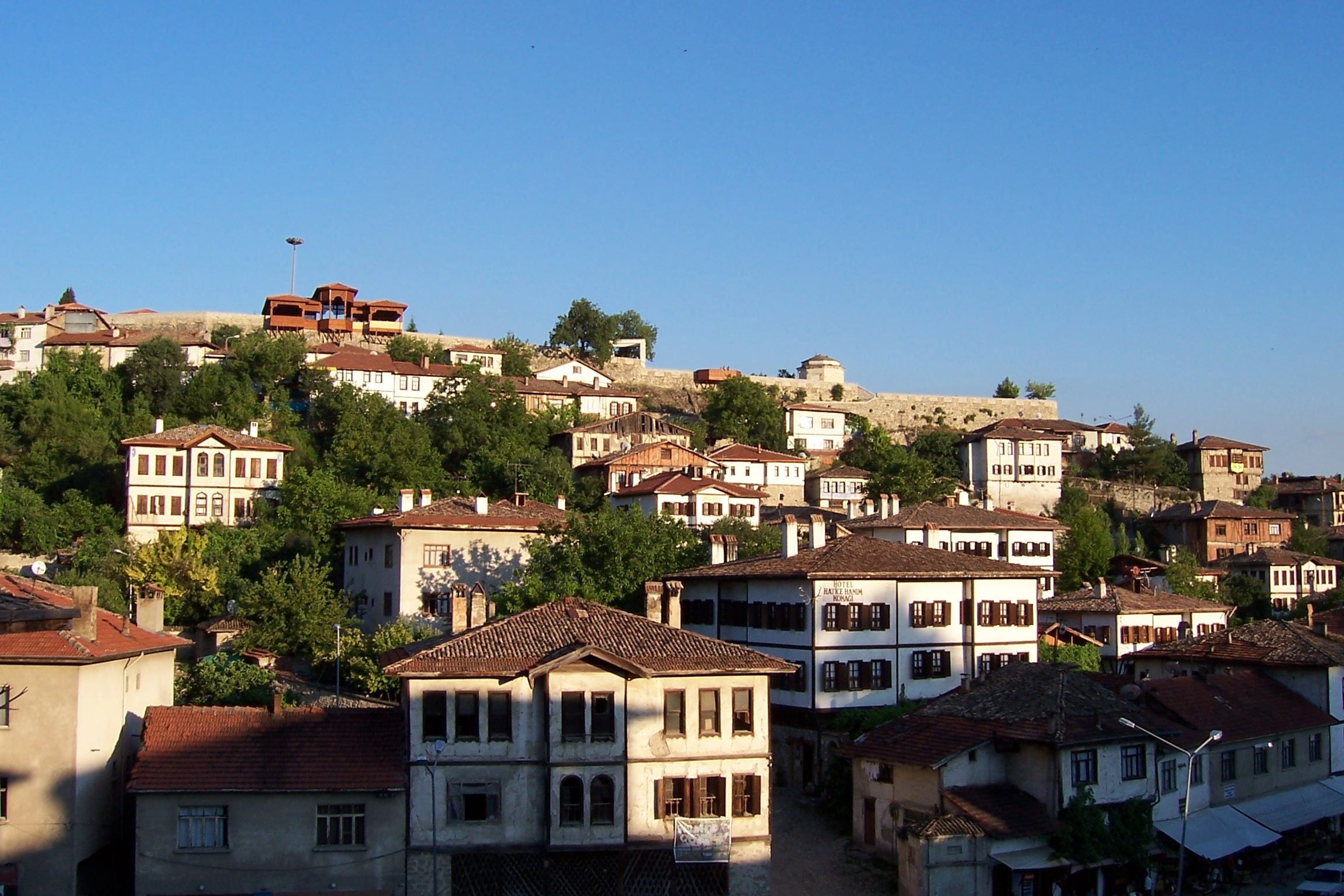
Read Safranbolu as a complete historic town
Safranbolu is best known for whitewashed timber-framed houses, yet its value lies in the way streets, markets, workshops, mosques, baths and homes still form a coherent urban landscape. UNESCO inscribed the city in 1994, recognising an important caravan station on the east–west trade route and an exceptionally preserved example of an Ottoman town. A good visit therefore goes beyond photographing façades. Plan enough time to walk between districts, enter a few carefully chosen buildings and understand how trade, family life and seasonal movement shaped the settlement.
Begin in Çukur, the historic market quarter
Start early in the lower market area, known as Çukur, before day visitors fill the narrow streets. The district gathers hans, craft shops, mosques and public buildings around commercial routes. Walk without a rigid checklist and notice how the street width changes, where water channels run and how shopfronts open toward public life. Cinci Han and the historic bath are prominent landmarks, but smaller passages are just as revealing. Businesses remain active, so keep doorways clear, ask before photographing artisans and avoid treating working shops as museum displays.
Use a house museum to understand the architecture
From the street, Safranbolu houses can seem similar. An interior visit explains their differences. Rooms were organised around family privacy, hospitality, storage and seasonal comfort; projecting upper floors made efficient use of narrow plots, while courtyards and service spaces supported daily work. Choose an officially accessible house rather than entering private property or following an unverified sign. Look at built-in cupboards, timber ceilings, window placement and the separation of circulation. The details make the townscape legible when you return outside.
Climb to a viewpoint with care
The slopes above the market reveal the relationship between tiled roofs, gardens and surrounding hills. Hıdırlık Hill is a familiar viewpoint, but the walk can be steep and surfaces may be slippery after rain or snow. Wear shoes with grip and allow time for pauses. Use the panorama to identify the market core and the direction of other districts rather than simply taking a wide photograph. Drone use and commercial photography can be regulated; never fly equipment over homes or crowds without checking current rules and permissions.
Compare Çukur with Bağlar and Kıranköy
UNESCO’s property includes distinct urban components, not one homogeneous old town. Bağlar developed with larger gardens and houses associated with seasonal movement, while Kıranköy adds another social and architectural layer. Travellers who stay only around the souvenir streets miss this contrast. Distances and gradients make transport useful, but a short walk in each district helps reveal variations in plot size, materials and street pattern. Respect residential quiet, especially in the morning and evening, and remember that many buildings remain private homes.
Look for craft rather than generic souvenirs
Safranbolu’s commercial identity is often represented by lokum, saffron products and decorative miniatures. Ask where an item was made and what ingredients or materials it contains. Genuine saffron is valuable and used in small quantities; colour alone does not establish quality. Metalwork, leather, wood and food products can be meaningful purchases when the maker and origin are transparent. Sampling before buying reduces waste, while modest packaging is easier to carry. Do not assume every object sold in a historic setting was produced locally.
Add nearby nature only with enough time
The surrounding region includes canyons, caves and forest landscapes, but combining several remote attractions with the historic centre in one day usually creates more driving than discovery. If nature is a priority, reserve a second full day and confirm access, weather and transport locally. Paths, viewing platforms and road conditions can change seasonally. Carry water, use marked routes and avoid approaching cliff edges for photographs. A slower plan also allows you to return to the old town after day-trip crowds leave.
Stay overnight for a different atmosphere
An overnight stay is one of the simplest ways to improve a Safranbolu visit. Evening and early morning reveal quieter streets and make it easier to appreciate the town as a lived environment. Historic accommodation varies greatly in room access, stairs, sound insulation and heating, so ask practical questions before booking. Travellers with limited mobility should request exact information rather than relying on descriptions such as “traditional.” Confirm parking arrangements because the most atmospheric lanes may not permit direct vehicle access.
Build a balanced two-day route
On day one, explore Çukur, visit one house museum and climb to a viewpoint before returning for an unhurried dinner. On day two, compare Bağlar or Kıranköy, then choose one nearby natural site if conditions are suitable. Check official opening information instead of relying on an old timetable. For a wider cultural journey, read our Ankara and Gordion guide and compare the available Türkiye tours. Safranbolu works best not as a quick architectural backdrop, but as a place where trade routes, domestic design and living neighbourhoods can still be read together.
Travel with the seasons in mind
Spring and autumn generally make walking easier, while summer midday heat and winter snow can change the route. Historic timber buildings may have steep stairs and limited climate control. Carry layers, keep luggage compact and ask accommodation providers about access before arrival. Seasonal conditions are part of Safranbolu’s character, but they should shape the pace rather than become an obstacle.