
A walk through a city of marble
Aphrodisias rewards travellers who want to understand an ancient city by walking between its public spaces. The UNESCO World Heritage site in Aydın province includes both the archaeological city and marble quarries to its northeast. That relationship matters: local stone and skilled sculptors helped give the city a distinctive artistic life. Instead of arriving for one photograph of the Tetrapylon, plan a route that joins the museum, theatre, Sebasteion, sanctuary and stadium. Each place shows a different use of marble, from civic display to religious image and everyday movement. A flexible walking order makes their connections easier to see.
Prepare for a spacious archaeological site
Read the current official visitor information before setting out. Opening conditions, transport and accessible routes can change, while the exposed ground makes weather an important part of planning. Wear shoes that cope with uneven paths, bring water and allow generous time for stops. If you travel from Denizli, Pamukkale, Kuşadası or another base, check the road journey and return options rather than relying on an optimistic day-trip estimate. A guide may help with inscriptions and sculpture, but a self-guided visit also works if you carry a reliable site map. Leave space for the on-site museum; it is part of the story, not an optional detour after the ruins.
Begin with the museum's human scale
Starting with sculpture gives the later walk useful detail. UNESCO describes Aphrodisias as an important centre of marble carving, supported by nearby quarries and workshops. Look at the treatment of hair, clothing and gesture on surviving pieces, then ask where such work might have stood in the city's streets and buildings. A museum display can make the craft visible at close range, while the outdoor site returns the works to an architectural scale. Read labels carefully: an original relief in the museum and a copy on a reconstructed facade serve different purposes. Both can help you understand a lost visual programme, provided you know which you are viewing.
Move into the theatre and civic heart
The theatre gives a clear sense of how the city addressed an audience. UNESCO notes an important wall of official documents associated with the theatre, evidence that public space could also carry political messages. Do not try to decipher every inscription unaided. Notice instead where writing was placed and who might have passed it. Continue through the civic areas at a measured pace. The agora, baths and council spaces show a city organised around gathering, movement and shared institutions. Some outlines are easier to read from a slight distance than from directly beside a wall. Stop, look back and use the site plan to connect the structures before moving on.
Read the Sebasteion as a visual story
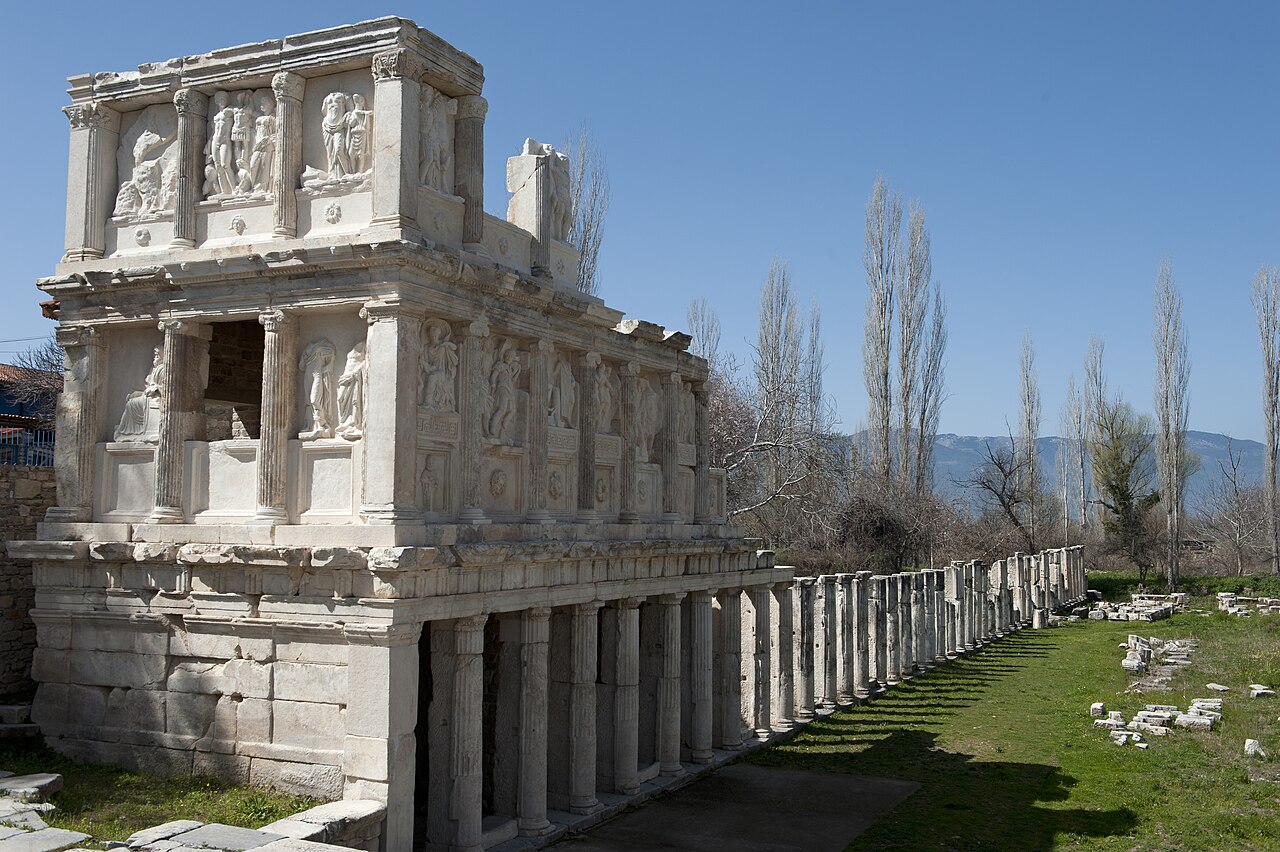
The Sebasteion was a richly decorated complex tied to imperial and local religious imagery. UNESCO describes its sculptural programme as a meeting of traditions, not merely an ornament attached to a temple. Walk its length slowly and compare what remains on site with the reliefs you saw in the museum. Reconstructed elements can help restore the scale of the space, but they should not erase the distinction between ancient fabric and modern presentation. Imagine the sequence of images encountered by someone moving through the complex. The effect depended on approach, repetition and the surrounding city, not on a single panel isolated for a camera.
Continue to the sanctuary and stadium
The Tetrapylon marks a conspicuous approach to the sanctuary of Aphrodite. Its carved surfaces invite a close look, but step back as well to see how a gateway frames movement. UNESCO records that the temple was later transformed into a church, a striking example of a building's changing use. The stadium offers a different experience: a vast public structure whose unusual form has curved ends. Walk only on permitted routes and leave time to absorb its scale. It is easy to spend all your attention on sculpture and miss the engineering and social life implied by such a gathering place. These two stops balance the intimate detail of carving with the dimensions of a city.
Keep the quarry connection in mind
The World Heritage listing includes quarries beyond the main archaeological area. You do not need to visit them to understand why they matter, but do not describe Aphrodisias as if its marble appeared from nowhere. Stone, labour, transport and artistic training connected the surrounding landscape to the buildings you have walked through. Ask how a rough block became a figure or an architectural element. The city's reputation rested on craftspeople and materials as much as on patrons. This perspective also helps avoid treating the ruins as a timeless white tableau. They were built, adapted, repaired and sometimes dismantled over a long history.
Place the day within an Aegean route
Aphrodisias makes a thoughtful counterpart to our Pamukkale guide, but each site deserves enough time to stand on its own. For a different ancient urban setting, read our Ephesus guide. The Türkiye tours page shows wider routes, and a tailored enquiry can clarify travel distances, guiding and services for your dates. Do not promise yourself every monument in one rushed circuit. Choose a route that lets the museum explain the stones and the stones give the museum a setting. That exchange is the lasting pleasure of Aphrodisias.