
A city best explored one table at a time
Kayseri's food is often reduced to mantı, yet the city offers a broader conversation about dough, preservation, spice and hospitality. At the foot of Mount Erciyes, a meal connects a market street with family cooking and Central Anatolia's landscape. GoTürkiye identifies mantı and pastırma among regional foods, alongside yağlama and local sweets. Do not collect every dish in one sitting. Begin with a bakery or market, choose one substantial lunch, and ask how different kitchens prepare familiar names. You will taste more clearly when you slow down.
Begin with ingredients, not a menu photograph
Spend part of the morning observing a market or specialist food street. Look for dried goods, fresh herbs, cheeses, dough products and the spices that shape local cooking. Ask a vendor what is made nearby and what is brought in from elsewhere; a regional label can cover many supply routes. This is also a chance to learn how dishes are eaten at home rather than relying only on restaurant descriptions. Buy modestly if you are unsure what travels well. Pastırma and other prepared meats require appropriate storage and transport, and rules for carrying food across borders differ. The market is not a staged museum, so move around working customers with courtesy and seek permission before photographing people.
Understand mantı as a craft
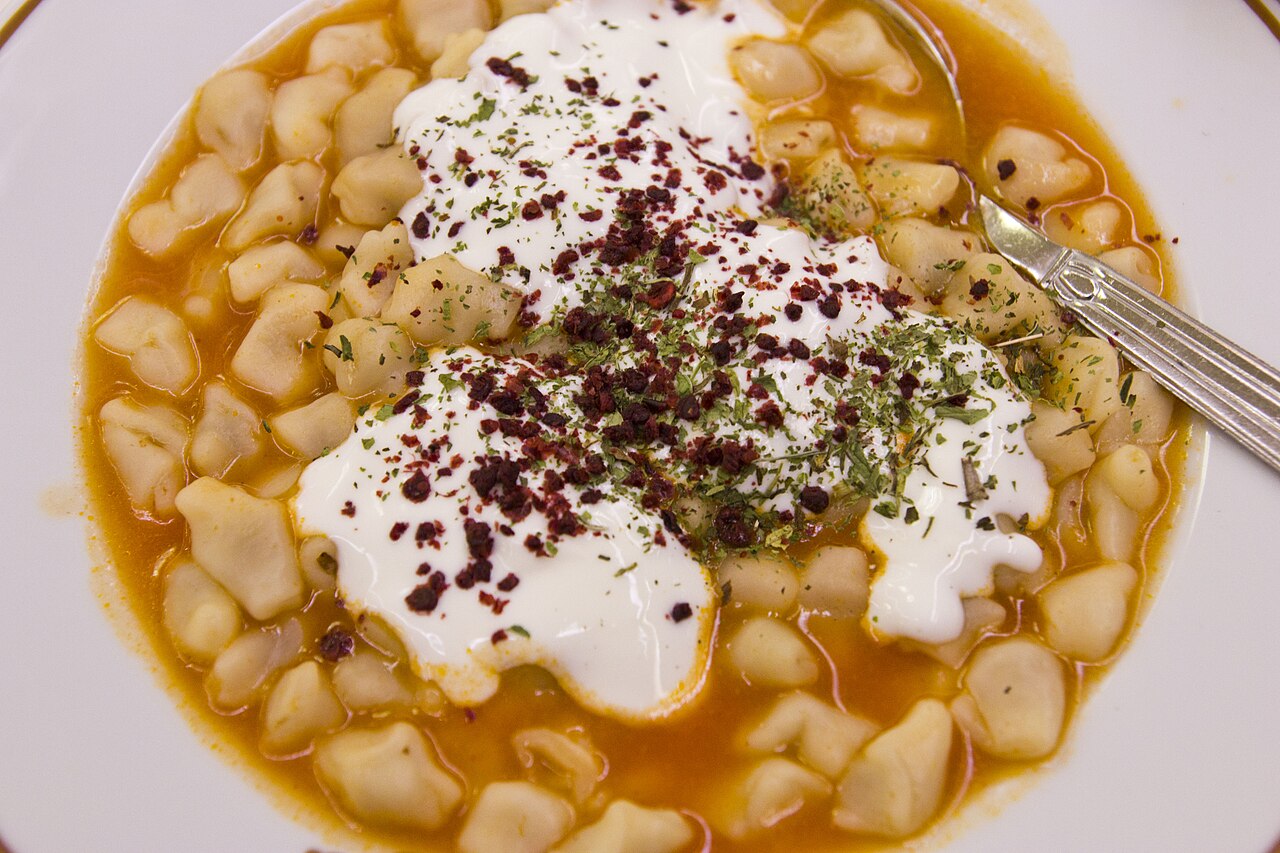
Kayseri mantı is made from small pieces of dough folded around a filling, commonly seasoned meat, then cooked and served with yogurt and sauces. GoTürkiye describes the dish as a defining local speciality. The appeal lies partly in the labour: cutting, filling and folding many small pieces asks for patience and practiced hands. Restaurants vary in size, seasoning and presentation, so avoid treating one bowl as the only authentic version. Taste the dough and filling before adding extra spice, then notice what the yogurt and butter contribute. If a kitchen offers an opportunity to watch preparation, do so without assuming a demonstration is available at every venue. A thoughtful meal is better than a contest over how many dumplings fit on a spoon.
Compare the city's other dough traditions
Yağlama offers a different relationship between bread, filling and shared eating. Thin flatbreads are layered with a seasoned meat mixture, then served in portions that reveal the stacked structure. GoTürkiye includes it among Kayseri's notable dishes. The textures and rhythm contrast with the individual parcels of mantı: one is built in layers, the other folded piece by piece. Ask how a particular restaurant prepares its version, because recipes and accompaniments vary. If you have only one day, consider sharing a portion of yağlama and a smaller bowl of mantı rather than ordering two full meals for one person. This leaves space to appreciate both dishes and reduces waste.
Look beyond the famous cured meat
Pastırma is closely associated with Kayseri. GoTürkiye describes salted and dried beef or buffalo meat covered with çemen, a spiced paste that includes fenugreek and pepper. The process is a food tradition, not a health claim or a guarantee of identical flavour across producers. Notice the aroma and texture, and ask about how a shop stores and serves its products. If you buy some to take away, confirm packaging and travel requirements. Sucuk, another seasoned meat product, may appear alongside it, but the two should not be treated as interchangeable. A small tasting or a sandwich can make more sense than buying a large quantity without knowing how you will use it.
Make time for a sweet finish
Kayseri's table does not end with savoury dishes. GoTürkiye's regional guide mentions nevzine and aside among local sweets. Rather than expecting every restaurant to make both, ask what a bakery or confectioner prepares that day. Notice the use of nuts, molasses or pastry where these appear, and let a small portion close the meal. Sweet traditions often depend on occasion and household practice, so a shop window cannot represent the whole city. A tea break also gives you time to review what you tasted and decide whether an evening meal should be light. Travel writing sometimes makes a regional kitchen sound like a checklist; real enjoyment comes from room between courses.
Pair food with the city around it
Leave the dining room and walk through Kayseri's central streets. A food route becomes richer when you notice the setting of markets, transport and everyday errands. Mount Erciyes may dominate the skyline, but the city is more than a gateway to the mountain or to Cappadocia. Use a museum or historic district visit to break up tastings, checking current access before you go. If you are planning a wider Central Anatolian journey, our Cappadocia guide offers a different relationship between landscape and local food, while the Konya food story helps compare regional traditions without declaring one cuisine more authentic than another.
Plan around appetite and practical details
Give yourself a full day rather than squeezing several dishes into an airport connection. Confirm restaurant opening arrangements, dietary needs and ingredients directly with the venue; recipes can change and cross-contact matters for some travellers. A guide can help with introductions and context, but you can also explore independently with a few well-chosen stops. Avoid fixed claims about price or availability unless checked close to travel. Carry water, choose comfortable shoes and leave the busiest part of the day flexible. If you want Kayseri to connect with a multi-region itinerary, explore our Türkiye tours or request a tailored route that includes the city for reasons beyond a quick meal.
Take home a more useful memory
The best souvenir from Kayseri may be an understanding of how one place works with dough and spice in several distinct ways. Mantı rewards attention to handwork; yağlama shows the pleasure of layers shared at a table; pastırma speaks to preservation and seasoning. None needs to stand for every household. Listen to the people who make and serve the food, compare without ranking, and allow an unplanned bakery stop to change your itinerary. When the day ends, you should remember the conversations and street atmosphere as clearly as the dishes. That is the difference between collecting tastes and getting to know a city through its table.